
Rugby Fitness Drills: 12 Conditioning Drills That Look Like the Game
Strength & Conditioning · 7 July 2026 · 10 min read
 With Phil Healey · S&C Coach
Starting at USD$0.82 USD$0.49/day when billed annually. Save 40%.


Your fitness should intimidate as much as your skillset.
The conditioning stack
Every session type, on tap.
On the field
 Pitch Fitness26 sessions · 12 to 48 min
 Hill Fitness11 sessions · 18 to 38 min
 Speed & Sprint12 sessions · 17 to 36 min
 Running6 sessions · 15 to 35 min
Off your feet
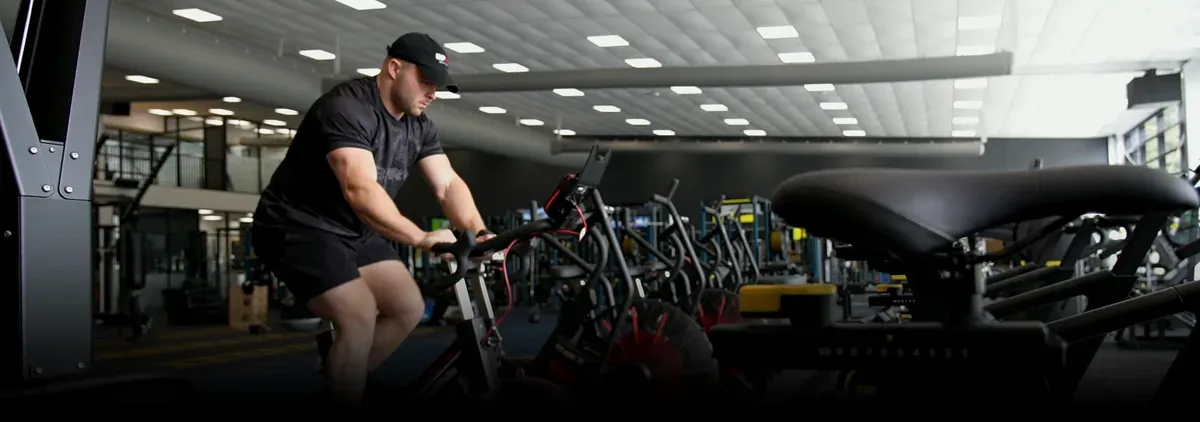 Bike16 sessions · 12 to 40 min
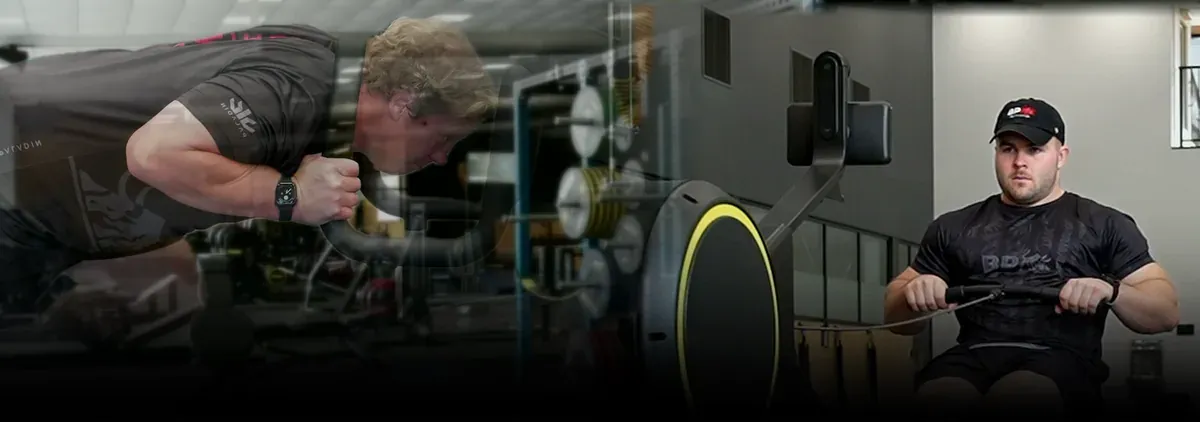 Rower24 sessions · 12 to 54 min
Rugby fitness is not the ability to run a good beep test. It is the ability to make your fifteenth tackle, hit your fortieth ruck and still win a footrace in the 78th minute. That means rugby fitness drills have to look like rugby: short, violent efforts, incomplete rest, decisions under fatigue. Laps of the pitch build tiredness tolerance; the drills below build match fitness.
Below are 12 rugby conditioning drills in three levels, with the distance, reps and rest for each: the three this guide has always had, then nine from Elite Rugby App’s own Pitch Fitness sessions, each with a film of a squad running it on our stadium. After them come the conditioning games, conditioning with no pitch, what changes by position, the weekly dose and how to test it.
What are the best rugby conditioning drills?
The best rugby conditioning drills look like rugby: short, violent efforts, incomplete rest, decisions under fatigue. Here are all twelve at a glance, by level.
| Drill | What it trains | Distance | Reps and rest |
|---|---|---|---|
| Beginner | |||
| 40/20 repeats | Repeat efforts in the rhythm of phase play. | 40 m sprint, 20 m jog back | 2 × 6 on a 30 s cycle, building to 3 × 8 |
| Up-down shuttles | Floor-to-feet fatigue: the get-ups. | 10 m shuttle | 30 to 40 s of work, 30 s rest |
| Position-split intervals | The efforts of your own position. | Forwards 6 to 10 s efforts; outside backs 60 to 80 m | Forwards: short rest, high repeat count. Outside backs: fuller recovery. |
| Intermediate | |||
| Sideline shuttles | Repeat efforts across the width of the field. | 216 to 220 m | 3 sets of 5, one every 75 s, 90 s between sets |
| Ground-up shuttles to the 22 | Getting from the ground to your feet, and going again. | 88 m a rep | 12 reps, each followed by a push-up or a tackle |
| 15‑second runs | Repeat sprints, at a distance set by your position. | Forwards 55 to 80 m, backs 65 to 85 m | 16 runs, 15 s rest |
| Shield drive and shuttle | Controlled collisions, then a shuttle. | 5 m drives, then a 100 m shuttle | 4 rounds, 60 s rest holding the shield |
| Wrestle, burpee, shuttle | Wrestling, then a sprint sized to your Bronco. | Out to a cone 40 to 52 m away, and back | 4 rounds, 6 if you have them, 90 s rest |
| Advanced | |||
| Bag hits and sprints | Contact, then sprints that finish on the ground. | 20 m and back, then 40 m and back | 6 rounds, 8 if you have them, 60 s rest |
| The 0-22-5-40-22-50 | Four turns in 120 m, then a skill while you rest. | 120 m, then 50 m home | 6 rounds, 10 if you have them, 90 s rest with a ball |
| The Bronco | Your running fitness, as one time to beat. | 1,200 m | 5 rounds, no rest |
| Cone and back, every minute | A test you can repeat, with the same cone every time. | Out to a cone 60 to 75 m away, and back | Every minute until your second miss |
Built for your position.
Answer a few questions and see the programs for your position, then train them in the app.








Read the full guide
The engine has two parts
Every conditioning session is training one of two things: the aerobic base (how fast you recover between efforts) or repeat-effort ability (how well you keep producing high-intensity efforts). Build the base first, in pre-season or off-season, then spend the year training repeat efforts on top of it. The phase-by-phase build is in our pre-season training guide.
Warm up first. Every Pitch Fitness session in the app starts the same way: 5 min easy jog, 10 leg swings each way, 10 walking lunges, 15 m of A-skips, 15 m of high knees, then 3 build-ups over 40 m at 70, 80 and 90%.
Drills 4 to 12 each have a film of a squad of twenty running them on our 3D stadium, and every drill but the third is drawn to distance. The diagrams read like this:
- Flat out
- Jog, walk or backpedal
- Chest to the ground
- A cone
- The order you run it
Beginner rugby conditioning drills
Start here: the three drills this guide has always opened with. Each one builds the way a lift does, by adding work time, reps or less rest.
1. 40/20 repeats
Sprint 40 metres, jog back 20, go again on a 30‑second cycle. Start with 2 sets of 6, build to 3 sets of 8. This is the closest a running drill gets to the rhythm of phase play.
- Trains
- Repeat efforts in the rhythm of phase play.
- Distance
- 40 m sprint, 20 m jog back
- Reps and rest
- 2 × 6 on a 30 s cycle, building to 3 × 8
2. Up-down shuttles
10-metre shuttle, hit the deck, up, shuttle again, 30 to 40 seconds of work, 30 seconds rest. The get-ups are the point: rugby fatigue is floor-to-feet fatigue.
- Trains
- Floor-to-feet fatigue: the get-ups.
- Distance
- 10 m shuttle
- Reps and rest
- 30 to 40 s of work, 30 s rest
3. Position-split intervals
Forwards: 6 to 10 second efforts (hit a pad, drive a sled, shuttle), short rest, high repeat count. Outside backs: longer 60 to 80 metre efforts at near-max speed with fuller recovery. A winger and a prop should not run the same conditioning session, the same way they should not lift the same gym program.
- Trains
- The efforts of your own position.
- Distance
- Forwards 6 to 10 s efforts; outside backs 60 to 80 m
- Reps and rest
- Forwards: short rest, high repeat count. Outside backs: fuller recovery.
Intermediate rugby fitness drills
Each of these is one drill from an Elite Rugby App Pitch Fitness session the app labels Intermediate, with the reps and rest that session sets.
4. Sideline shuttles
From a touchline: out to the 5 m line and back, then the 15 m line and back; across the field, the same there, then sprint home. Inside 50 to 75 seconds. Very fit? An up-down on each line.
- Trains
- Repeat efforts across the width of the field.
- Distance
- 216 to 220 m
- Reps and rest
- 3 sets of 5, one every 75 s, 90 s between sets
5. Ground-up shuttles to the 22
Start on your stomach on the try line. Run two shuttles to the 22 and back, chest to the ground at each turn, and aim for 15 seconds. Then a push-up or a tackle, and go again.
- Trains
- Getting from the ground to your feet, and going again.
- Distance
- 88 m a rep
- Reps and rest
- 12 reps, each followed by a push-up or a tackle
6. 15-second runs
Run flat out for 15 seconds, then rest at the side for 15, and go again. Backs aim for 65 to 85 m, forwards 55 to 80 m.
- Trains
- Repeat sprints, at a distance set by your position.
- Distance
- Forwards 55 to 80 m, backs 65 to 85 m
- Reps and rest
- 16 runs, 15 s rest
7. Shield drive and shuttle
Drive a teammate holding a contact shield 5 m, come back, then a down and up: five times. No partner? Tackle a bag, or a down and up at the cone. Then a shuttle out and back to cones at 5, 10, 15 and 20 m, with a down and up every time you touch the start. Swap and hold the shield.
- Trains
- Controlled collisions, then a shuttle.
- Distance
- 5 m drives, then a 100 m shuttle
- Reps and rest
- 4 rounds, 60 s rest holding the shield
8. Wrestle, burpee, shuttle
Pair up with somebody your size. On "3, 2, 1, wrestle", fight for 12 seconds to get both arms under theirs. Then 1 burpee, then a shuttle to your cone and back. Your cone by your Bronco: over 5:45 at 40 m, 5:30 at 43 m, 5:15 at 45 m, 5:00 at 48 m, 4:45 at 50 m, under 4:30 at 52 m.
- Trains
- Wrestling, then a sprint sized to your Bronco.
- Distance
- Out to a cone 40 to 52 m away, and back
- Reps and rest
- 4 rounds, 6 if you have them, 90 s rest
No Bronco time yet? Time one first on our Bronco test timer.
Advanced rugby conditioning drills
The app labels these sessions Advanced. Bodies have to be prepared for contact gradually, not thrown into full live sessions in week one.
9. Bag hits and sprints
4 bag hits or 20 seconds of wrestling. Then sprint 20 m and back, and 40 m and back, with your chest to the ground at the finish of each.
- Trains
- Contact, then sprints that finish on the ground.
- Distance
- 20 m and back, then 40 m and back
- Reps and rest
- 6 rounds, 8 if you have them, 60 s rest
10. The 0-22-5-40-22-50
From the try line: to the 22, back to the 5, up to the 40, back to the 22, then on to halfway. Backpedal and shuffle home. Pass a ball or work a skill while you rest.
- Trains
- Four turns in 120 m, then a skill while you rest.
- Distance
- 120 m, then 50 m home
- Reps and rest
- 6 rounds, 10 if you have them, 90 s rest with a ball
11. The Bronco
Cones at 20, 40 and 60 metres. Run to each and back in that order, five times through without stopping: 1,200 metres. Record your time. The lower it is, the fitter you are.
- Trains
- Your running fitness, as one time to beat.
- Distance
- 1,200 m
- Reps and rest
- 5 rounds, no rest
Time it with our free Bronco test timer: a mate taps it each time you get back to the start cone, and it gives you your shuttle splits and published Super Rugby times to compare with.
12. Cone and back, every minute
A test: out to a cone 60 to 75 m away and back inside 30 seconds, every minute, for as long as you can. You have one life: miss one and carry on. Miss a second and the test is over. Keep the distance the same next time.
- Trains
- A test you can repeat, with the same cone every time.
- Distance
- Out to a cone 60 to 75 m away, and back
- Reps and rest
- Every minute until your second miss

Rugby conditioning games with a ball
Small-sided games are the highest-transfer conditioning in the sport: players hit match heart rates while passing, evading and deciding.
- Two-touch keep-ball. 7v5 in a 30 × 30 m grid, attackers limited to two touches (catch, pass). Turnover on a dropped ball or a touch by the defence. Relentless movement plus early-hands passing.
- Transition game. On the coach's call, attack becomes defence instantly and must scramble back 20 metres. Trains the worst-case fitness moment in rugby: the turnover.
- Ruck-touch. Touch triggers a placement and a real clean-out over the ball. Adds the floor work that makes touch conditioning honest.
The full keep-ball setup is in our rugby passing drills.
Rugby conditioning with no pitch and no kit
Flat grass, cones and a tape are enough for much of this page: the 40/20 repeats, up-down shuttles, 15-second runs and the Bronco need no pitch markings at all. Measure the distances with a tape, not your stride.
No kit at all? Elite Rugby App’s Burpee 30/30 is ten half-minute efforts of burpees with 30 seconds of rest between them, after a 5-minute warm-up and before a 3-minute cool down.
No grass at all? Elite Rugby App’s Fitness has hill sessions, and off-feet sessions on the air bike, spin bike and rower.
How does conditioning change by position?
A winger and a prop should not run the same conditioning session, the same way they should not lift the same gym program. The front row needs scrummaging strength, collision tolerance and a repeat-effort engine; the back three need top-end speed, change of direction and high balls under fatigue. Elite Rugby App’s own sessions set different distances by position:
| Position | What it needs | 2½-minute runat 85 to 90% | 15-second run | 20-second out and backturn at |
|---|---|---|---|---|
| Front row | Scrummaging strength, collision tolerance and a repeat-effort engine. | 650 m | 55 to 80 m | 40 to 45 m |
| Locks and loose forwards | The lineout jump and lift, the maul drive and restarts; tackle after tackle and the jackal. | 700 m | 55 to 80 m | 40 to 45 m |
| Backs | Top-end speed, change of direction and high balls under fatigue. | 722 m or more | 65 to 85 m | 40 to 55 m |
Not sure which group you are in? Find the position your body suits.
How much conditioning should you do each week?
In-season, most of your conditioning should already be inside rugby training: one conditioned game per pitch session plus one short repeat-sprint block early in the week is plenty. Off-season, two to three dedicated sessions build the base. Pre-season is two a week, and the speed in it is always run fresh, early in a session.
| Phase | Conditioning a week | What it looks like |
|---|---|---|
| Off-season | 2 to 3 dedicated sessions | Aerobic continuous engine work: the block that builds the tank pre-season runs on. |
| Pre-season | 2 | Anaerobic capacity and repeat efforts: tempo runs to build the engine, then repeat sprints with short rests, then short, sharp conditioning. |
| In-season | 1 short repeat-sprint block early in the week, plus one conditioned game per pitch session | Anaerobic specific maintenance, top-end speed and match-day sharpness. |
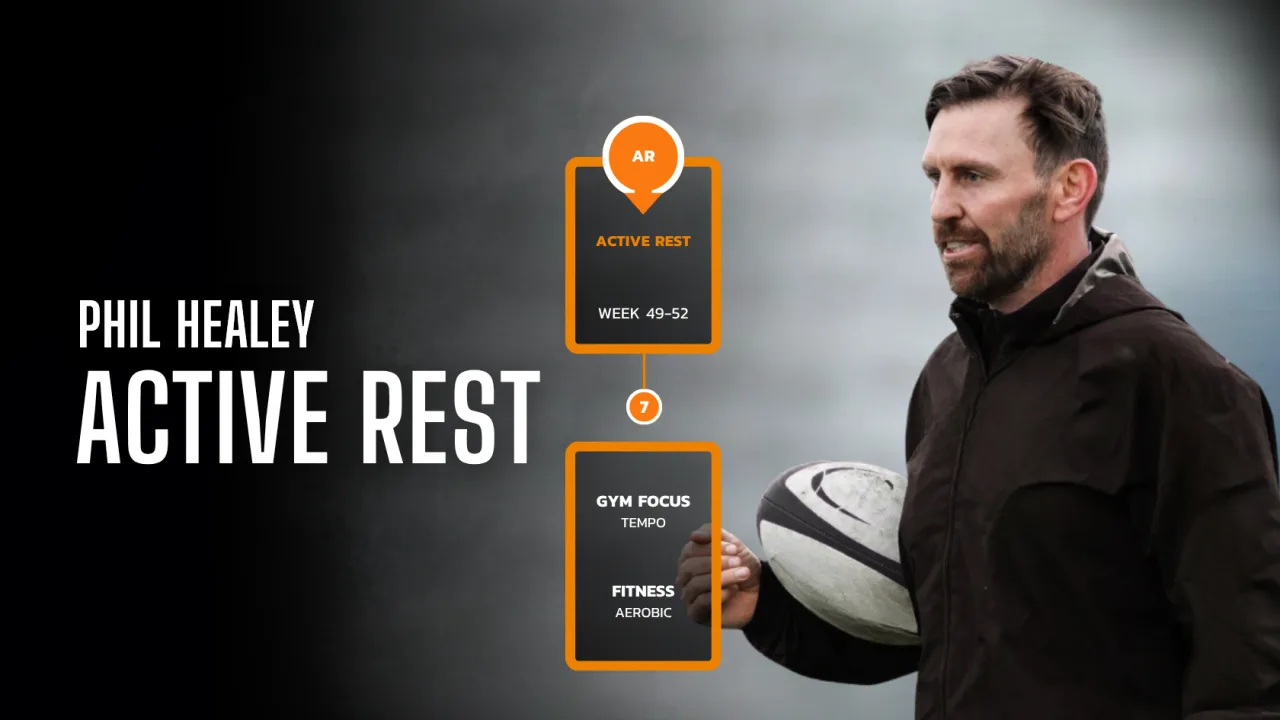
| Active rest | Off your feet | Bike, rower, swimming: tempo and aerobic base without the joint load. |
Where it sits around gym and skills is mapped in the rugby training program guide, and the eight weeks before your first game are in rugby pre-season training.
How do you test your rugby fitness?
Test it, or you’re guessing.
- 1.2 km time trial or Bronco: the aerobic benchmark, three or four times a year. Time it with our free Bronco test timer.
- 10 × 40 m repeat-sprint decrement: how much do sprints 9 and 10 fall off sprint 1? Under 8% is strong.
- Cone and back, every minute (drill 12): keep the distance the same next time, and count your reps.
- The eye test that counts: are you the one calling the next play while others have hands on knees?
Retest the same way: the same field, the same boots, the same time of day and the same person on the stopwatch.
What are the most common conditioning mistakes?
- Conditioning every session. Fatigue is not a training goal. Speed and skills need fresh legs.
- Long slow running as the default. Useful early off-season, near-useless for match fitness after that.
- No progression. The same 4 × 4-minute grind every Tuesday stops adapting after three weeks. Progress work time, rep count or rest like you would a lift.
- Too much, too soon. Massive loads in week one buy three weeks of soreness and a strain in week four. Ramp gradually.
- Skipping speed. Conditioning is not speed. If you never sprint fresh, you never get faster.
Frequently asked questions
What are the best rugby conditioning drills?
The best rugby conditioning drills look like rugby: short, violent efforts, incomplete rest and decisions under fatigue. Repeat sprints such as 40/20s, up-down and ground-up shuttles, sideline shuttles, contact drills such as shield drives and wrestling, and small-sided games all qualify. Laps of the pitch build tiredness tolerance, not match fitness.
How do rugby players get fit?
Rugby players get fit by building the aerobic base first, in the off-season or pre-season, then spending the year training repeat efforts on top of it. In season, most of their conditioning sits inside rugby training: one conditioned game per pitch session plus one short repeat-sprint block early in the week.
How often should I do conditioning for rugby?
You should do two to three dedicated conditioning sessions a week in the off-season and two a week in pre-season. In season, most of your conditioning should already be inside rugby training: one conditioned game per pitch session plus one short repeat-sprint block early in the week is plenty.
How do I get rugby fit in four weeks?
To get rugby fit in four weeks, give each phase one week: general prep with your tests, specific prep, pre-competition with your retest, and the taper. It is the shortest runway that still works. It will get you through round one rather than to your best, so treat the first few rounds as part of the build. The week-by-week version is in the four-week rugby pre-season.
Can I do rugby conditioning without a pitch?
Yes, you can do rugby conditioning without a pitch. Flat grass, cones and a tape are enough for 40/20 repeats, up-down shuttles, 15-second runs and the Bronco: measure with a tape, not your stride. With no grass at all, hill sessions and off-feet sessions on an air bike, spin bike or rower do the job.
Where this fits with Elite Rugby App
Drills 4 to 12 come from the Pitch Fitness sessions inside Elite Rugby App, where each one sits in a whole session with its warm-up, a timer for every effort and its film above it. The Elite Rugby App fitness programs package all of this, aerobic blocks, repeat-sprint phases, position-specific engine sessions, into a periodised plan. Bring the effort; the structure is done.
Train it, don’t just read it
Every session in this guide is built, periodised and coached inside Elite Rugby App, from the strength staff behind international and Super Rugby teams.
Weighing it up? Read how Elite Rugby App compares with other rugby training apps.