
Rugby Pre-Season Training: The Eight-Week Build
Strength & Conditioning · 30 June 2026 · 15 min read
 With Phil Healey · S&C Coach
Starting at USD$0.82 USD$0.49/day when billed annually. Save 40%.


Your fitness should intimidate as much as your skillset.
The conditioning stack
Every session type, on tap.
On the field
 Pitch Fitness26 sessions · 12 to 48 min
 Hill Fitness11 sessions · 18 to 38 min
 Speed & Sprint12 sessions · 17 to 36 min
 Running6 sessions · 15 to 35 min
Off your feet
 Bike16 sessions · 12 to 40 min
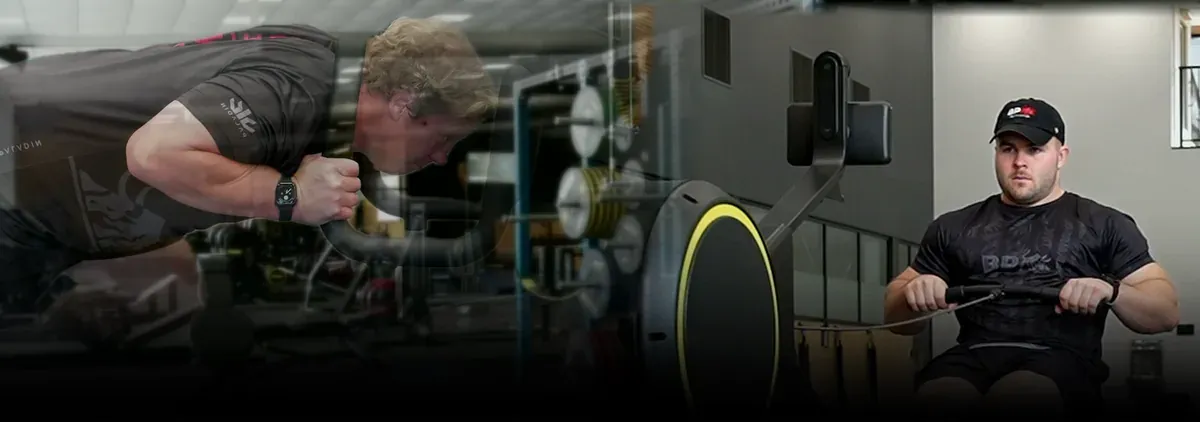 Rower24 sessions · 12 to 54 min
A rugby pre-season training program is an eight-week build that moves through three phases: general prep, specific prep and pre-competition. It covers four pillars (strength, conditioning, speed and power, and contact preparation), and it is counted backwards from your first game so you peak in round one rather than three weeks early.
This guide lays out the eight weeks, shorter six and four-week versions for players who start late, your first week back, the tests that tell you where you stand, a sample training week, and the mistakes that wreck more pre-seasons than any injury. All of it is in a free PDF you can take to training.
Phil Healey’s record: Counties Manukau 2003-2008, Chiefs 2008-2017, Glasgow Warriors 2017-2018, Blues, Kobe Steelers, New Zealand head of performance from 2026.
How long should a rugby pre-season be?
A rugby pre-season should be six to twelve weeks, and eight is the common club figure. Before a single weight is loaded, count backwards from your first game. That number of weeks is your runway, and it decides everything: how long you spend building a base, when you sharpen, and when you back off so you peak at the right time rather than three weeks early. A short runway shortens the base phase, never the taper, and if yours is six or four weeks there is a version of the program for each below.
Pre-season is where the season is quietly won or lost. Not in the sessions that leave you crawling off the pitch, but in the ones that build a base broad enough to hold up in round one, round fifteen, and the 75th minute of a final. The goal of a rugby pre-season is not to be sore. It is to arrive fitter, faster and harder to put down than the team across the halfway line.

Built for your position.
Answer a few questions and see the programs for your position, then train them in the app.








Read the full guide
What does an 8-week rugby pre-season program look like?
An eight-week rugby pre-season program is periodised, which simply means it moves through phases instead of hammering the same thing for eight weeks straight. Volume leads, intensity follows, and contact is layered in rather than switched on.
| Week | Phase | Gym | Running | Contact |
|---|---|---|---|---|
| 1-3 | General prep (base)Tests in week 1 | 3 sessions, 3 × 10 rising to 3 × 8, a little heavier each week | Tempo runs to build the engine, plus short sprints run fresh | None |
| 4-6 | Specific prep | 3 sessions, 4 × 5 heavy, then 5 × 3 moved fast | Repeat sprints with short rests, plus 30 m sprints run fresh | Controlled: wrestle, technique, graded collisions |
| 7 | Pre-competitionRetest this week | 2 sessions, 3 × 3 moved fast | Flying sprints and short, sharp conditioning | Full, but short and infrequent |
| 8 | Taper and trial | 1 or 2 short sessions, 2 × 3, nothing to failure | Sprint primers, the team run and one trial game | Match |
How to read the table:
- 3 × 10 means three sets of ten reps on each of the main lifts (a squat, a hinge, a press and a pull), with neck and trunk work every week.
- Moved fast means a lighter weight lifted as quickly as you can. The set ends when the bar slows down.
- Tempo runs are 100 m at a steady pace with a walk back, ten to sixteen of them.
- Repeat sprints are 40 m shuttles (20 m out and back) in sets of six, with about 20 seconds between runs and three minutes between sets.
- Flying sprints start from a rolling 20 m run-up, so the part that counts is all top speed.
- Sprint primers are three or four short, sharp runs to wake the legs up before a game.
The running column is the whole pre-season conditioning program, and the speed in it is always run fresh, early in a session. A planned easy week every third or fourth week sits inside that runway, not outside it. If your first game is six or four weeks away, use one of the shorter versions below: they cut the base and the specific prep, and keep the last two weeks exactly as they are.
What does a 6-week rugby pre-season look like?
A six-week rugby pre-season is the eight-week program with one week taken off general prep and one off specific prep. The last two weeks do not change: a pre-competition week with your retest, then the taper into a trial. It suits a player who kept training through the off-season, or one whose club starts back late.
| Week | Phase | Gym | Running | Contact |
|---|---|---|---|---|
| 1 | General prepTests this week | 3 sessions, 3 × 10 with a weight you could lift a few more times | Tempo runs, plus 6 × 20 m sprints run fresh | None |
| 2 | General prep | 3 sessions, 3 × 8, a little heavier | More tempo runs, plus 6 × 20 m sprints run fresh | Tackle technique at walking pace |
| 3 | Specific prep | 3 sessions, 4 × 5 heavy | Repeat sprints, 2 sets of 6 × 40 m, plus 6 × 30 m sprints | Controlled: wrestle and technique |
| 4 | Specific prep | 3 sessions, 5 × 3 moved fast, plus jumps | Repeat sprints, 3 sets of 6 × 40 m, plus 8 × 30 m sprints | Graded collisions |
| 5 | Pre-competitionRetest this week | 2 sessions, 3 × 3 moved fast | Flying sprints and short, sharp conditioning | Full, but short and infrequent |
| 6 | Taper and trial | 1 or 2 short sessions, 2 × 3, nothing to failure | Sprint primers, the team run and one trial game | Match |
What does a 4-week rugby pre-season look like?
A four-week rugby pre-season gives each phase one week: general prep with your tests, specific prep, pre-competition with your retest, and the taper. It is the shortest runway that still works. It will get you through round one rather than to your best, so treat the first few rounds as part of the build.
| Week | Phase | Gym | Running | Contact |
|---|---|---|---|---|
| 1 | General prepTests this week | 3 sessions, 3 × 10 with a weight you could lift a few more times | Tempo runs, plus 6 × 20 m sprints run fresh | Tackle technique at walking pace |
| 2 | Specific prep | 3 sessions, 4 × 5 heavy | Repeat sprints, 2 sets of 6 × 40 m, plus 6 × 30 m sprints | Controlled: wrestle, graded collisions |
| 3 | Pre-competitionRetest this week | 2 sessions, 3 × 3 moved fast | Flying sprints and short, sharp conditioning | Full, but short and infrequent |
| 4 | Taper and trial | 1 or 2 short sessions, 2 × 3, nothing to failure | Sprint primers, the team run and one trial game | Match |
Three rules if you are starting late:
- Do not try to catch up. Cramming eight weeks of work into four is the too-much-too-soon mistake, and it costs more than it gains.
- Keep the speed. Short sprints go in from week one, fresh, at the start of a session.
- Start lighter if you have done nothing since last season. Run week 1 easier than the table says and add nothing extra.
Download the free rugby pre-season training program PDF
The rugby pre-season training program PDF puts this guide’s tables on printable pages: the eight-week program, the six and four-week versions, your first week back, the tests, a sheet to write your numbers on, and the sample week. The cover says plainly that it is the pre-season only; the rest of the year is inside Elite Rugby App.
Get the pre-season program as a PDF
The eight weeks, the six and four-week versions, your first week back and a sheet for your test numbers. We'll add you to the list, and the download link is right here, nothing to wait for.
By clicking “Get the PDF”, and sharing your email, you agree to our Terms of Service and Privacy Policy.
Or download it straight away: Rugby Pre-Season Training Program (PDF, 6 pages), no email needed.
What should your first week back at pre-season look like?
Your first week back should be about getting through it healthy and finding out where you stand, not proving anything. Lift and run at about three quarters of what you could do, finish every session feeling you had more in you, and do your tests once your body has had two days to wake up.
| Day | Session | Why |
|---|---|---|
| Monday | Gym: the main lifts at 3 × 8 with a weight you could lift a few more times, then neck and trunk | Reminds your body how to lift before anything heavy |
| Tuesday | Tempo runs: 10 × 100 m at a steady pace, walking back, then mobility | Restarts the engine without a flat-out sprint |
| Wednesday | Tests: jumps, then 10 m and 40 m sprints, then the squat, bench press and chin-ups | Your speed and strength numbers, taken fresh |
| Thursday | Recovery: mobility and 20 to 30 minutes easy on a bike | Soreness peaks a day or two after your first sessions back |
| Friday | Test: the Bronco, after a full warm-up, and nothing else | Your fitness number |
| Saturday | Skills or touch with no contact, or a day off | Hands and feet back on a ball |
| Sunday | Rest | Week 2 starts fresh |
Expect to be sore midweek, which is why Thursday is easy and the Bronco waits until Friday. Eat properly, sleep, and save any extra sessions for later in the program: week one is where too much, too soon starts.
How do you test your fitness in pre-season?
Test in your first week and again in the pre-competition week, so you finish pre-season with numbers rather than a feeling. Three things are worth testing: your speed, your strength and your engine. Run the least tiring tests first, jumps and sprints and then the gym, and give the Bronco a day of its own.
| Test | What it tells you | How to run it |
|---|---|---|
| Broad jump | Leg power | Two-footed jump from a standing start, best of three |
| 10 m sprint | Acceleration, your first few steps | From a standing start, best of three, walking back between runs |
| 40 m sprint | Top speed | The same start, best of two, walking back between runs |
| Squat | Lower-body strength | Work up to a heavy set of five, stopping with a rep or two left in you |
| Bench press | Upper-body pushing strength | The same: a heavy set of five, with a rep or two left |
| Chin-ups | Upper-body pulling strength | As many clean reps as you can from a dead hang |
| Bronco | Your engine, and how well you repeat hard runs | 1,200 m of 20, 40 and 60 m shuttles, five rounds, no rest, on a day of its own |
Time the Bronco with our free Bronco test timer: a mate taps it each time you get back to the start cone, and it gives you your shuttle splits and published Super Rugby times to compare with. For everything else, the number that matters is your own last one.
Retest the same way: the same field, the same boots, the same time of day and the same person on the stopwatch. Hand timing is rough over a short sprint, so only trust a change that shows up on every run. A beginner can skip the squat and bench tests and write down what they lifted for 3 × 10 instead.
What are the four pillars of a rugby pre-season?
The four pillars of a rugby pre-season are strength, conditioning, speed and power, and contact preparation: the ERA Four-Pillar Pre-Season. Every week of the runway above touches all four; what changes between phases is how much of each.
1. Strength
Strength is the platform power, speed and contact all sit on top of. Progress through it: a hypertrophy block to build muscle, a max-strength block on the big lifts (squat, deadlift, bench, chin-up, hip thrust), then a power block that turns that strength into explosive output. Train it twice or three times a week and keep the main lifts heavy and simple.
2. Conditioning
Build the engine before you build the top end. Start with aerobic base work so you can recover between efforts, then layer in anaerobic capacity and repeat-sprint conditioning that actually looks like rugby: short, sharp, repeated, with incomplete rest. Conditioning that holds up in the last ten minutes is built in the first few weeks, not the last, and the conditioning drills behind the engine phase are the ones that transfer.
3. Speed and power
The most-skipped pillar, and the one that wins matches. Acceleration and max-velocity sprinting need to be trained fresh, early in a session, with full recovery. A few quality metres beats a hundred tired ones. Neglect speed in pre-season and you spend the whole year a step behind the play.
4. Contact and collision prep
Bodies have to be prepared for contact gradually, not thrown into full live sessions in week one. Build the neck, trunk and shoulders, layer in wrestling and controlled collisions, and progress the exposure week by week. This is durability work as much as performance work, see our durability guide to staying on the pitch.
What does a pre-season training week look like?
A pre-season training week looks like four hard days, one recovery day, one game-shaped day and one full rest day. Heavy and fast work goes early in the week and early in the session; conditioning volume sits in the middle; the weekend is for recovery so the next week starts fresh.
| Day | Session | Focus | Duration |
|---|---|---|---|
| Monday | Lower-body max strength + short speed (acceleration) | Strength | 75 min |
| Tuesday | Aerobic / repeat-sprint conditioning + skills | Conditioning | 70 min |
| Wednesday | Upper-body strength + controlled contact / wrestle | Strength and contact | 75 min |
| Thursday | Recovery, mobility, light aerobic flush | Recovery | 40 min |
| Friday | Power + max-velocity speed + team run | Speed and power | 75 min |
| Saturday | Conditioning games or a trial, then off-feet recovery | Conditioning | 60 min |
| Sunday | Full rest | Rest | None |
For the gym side written out by position, the four-week rugby workout plan runs the same blocks (base, build, power and peak) on a lighter four-day week, with a per-position PDF you can take to the gym.
What are the most common pre-season mistakes?
- Too much, too soon. Massive loads in week one buy three weeks of soreness and a strain in week four. Ramp gradually.
- Skipping speed. Conditioning is not speed. If you never sprint fresh, you never get faster.
- No deload. A planned easy week every third or fourth week is when adaptation actually happens.
- Junk volume. Random extra runs and circuits with no purpose just add fatigue and steal from the work that matters.
- Ignoring fuel and sleep. You cannot out-train poor nutrition and under-recovery. They are part of the programme, not optional extras.
How does pre-season change by position?
A prop and a winger do not need the same pre-season. The front row needs scrummaging strength, collision tolerance and repeat-effort engine; the back three need top-end speed, change of direction and high-ball under fatigue. The phases are the same, but the emphasis, the running volumes and the gym focus should match what the position actually does on a Saturday. We break the gym side down position by position in the rugby gym workout guide, the full weekly structure in the rugby training program guide, and what a full-time squad’s week looks like in the pro rugby player workout.
Where to find out more
Further reading on coaching and player welfare is published free by World Rugby Passport, the governing body’s own coaching site, and by World Rugby itself, including its contact-load and injury-prevention guidance. National unions publish season-planning resources for club and school coaches: England Rugby and New Zealand Rugby.
Frequently asked questions
What is a good pre-season training schedule for rugby?
A good pre-season training schedule for rugby runs eight weeks and moves through three phases: three weeks of general prep, three of specific prep, then a week of sharpening and a week of taper into a trial. Four training days a week, with strength and speed early and conditioning in the middle.
What does pre-season training consist of?
Pre-season training consists of four pillars: strength, conditioning, speed and power, and contact preparation. It moves through three phases (general prep, specific prep and pre-competition), building volume first, then intensity, then sharpness, so the athlete arrives at round one fresh rather than peaking three weeks early.
What is pre-season rugby?
Pre-season rugby is the block of training between the off-season and round one, when the physical base for the whole season is built. There are no league points on offer, so the work is deliberately hard early and deliberately lighter late, and the only fixtures are trials.
What is a good pre-season rugby training plan?
A good pre-season rugby training plan is periodised, which means the emphasis changes week by week rather than staying the same for two months. Volume leads, intensity follows, contact is layered in gradually, and a planned easy week every third or fourth week is where the adaptation actually happens.
How long is the rugby pre-season?
The rugby pre-season is usually six to twelve weeks long, and eight weeks is the common club figure. The runway is set by counting backwards from the first fixture, not by picking a number: a short pre-season shortens the base phase first, never the taper.
How long should rugby pre-season last?
Rugby pre-season should last eight weeks for most club players, and four is the shortest that still works. Six is plenty if you kept training through the off-season, and more than eight suits a player coming back from a long break. Whatever the length, keep the last week as the taper into your trial.
Should I run every day in pre-season?
You should not run every day in pre-season. Two conditioning sessions and two short speed sessions a week is plenty, with an easy day after each hard one, and the gym, skills and recovery fill the rest. Running hard every day piles up fatigue faster than your legs can recover, so you get slower, not fitter.
How many gym sessions a week should I do in pre-season?
Most players should do three gym sessions a week in pre-season, and four at the most. Three is enough to build strength while leaving room for running, skills and recovery: a lower-body day, an upper-body day and a power day. Drop to two in the last two weeks, when freshness matters more than adding weight.
Can beginners follow a pre-season program?
Beginners can follow a pre-season program if they run it lighter. Keep the same phases, but do two or three full-body gym sessions at three sets of ten with a weight you could lift a few more times, and add running a little each week. Skip the strength tests in week one and write down what you lifted instead.
How do I get fit before pre-season starts?
To get fit before pre-season starts, give yourself three or four weeks of easy, regular training: two or three runs a week at a pace you can talk at, two gym sessions on the main lifts, and a few short sprints. The aim is to arrive able to train, not to be at your best in week one.
Is 5'9" too short for rugby?
5'9" is not too short for rugby. The half-back band in eight of the squads at the 2023 World Cup starts at 1.74 m, and internationals play below it. Height rules out the second row and nothing else; pre-season work is what changes your selection odds. There is a full breakdown of which rugby position suits your body type.
How many hours a day do rugby players train?
Professional rugby players train roughly four to six hours a day in pre-season, spread across two or three sessions with recovery between them. That is a full-time job, and it is why a club or school player copying a professional week gets hurt: the sessions are the same shape, at a fraction of the volume.
What is a good workout routine for rugby?
A good workout routine for rugby is four gym days a week in pre-season, built on a small number of heavy compound lifts, with speed work placed fresh at the start of a session and conditioning after it. Neck and trunk work goes in every week without exception.
What to eat 3 hours before a rugby match?
Three hours before a rugby match you want a normal-sized meal built on carbohydrate, with some protein and very little fat or fibre, plus fluid. Rice, pasta or potatoes with chicken or fish is the standard. Keep it familiar: a match day is the worst possible time to try a new food. The detail is in our rugby nutrition guidance.
How much should a 6-2 rugby player weigh?
A 6'2" rugby player's weight depends on the position they play. Across eight of the squads at the 2023 World Cup, players of that height ranged from back-three weights to front-row weights, and pre-season is where that number is moved deliberately rather than by accident.
Where this fits with Elite Rugby App
Everything above is exactly what we build inside the app, so you are not left assembling it yourself. The gym programs are periodised and position-specific across a full 365-day cycle, the fitness programs build the engine phase by phase, and it is all coached, not just listed, by the strength staff behind international and Super Rugby setups. You bring the work; the plan is already done.
Train it, don’t just read it
Every session in this guide is built, periodised and coached inside Elite Rugby App, from the strength staff behind international and Super Rugby teams.
Weighing it up? Read how Elite Rugby App compares with other rugby training apps.